
Back

5 minutes
Baker tips
Adding Inclusions to Sourdough: Different Methods Explained
Alisha Fuller


Adding inclusions to your sourdough is a great way to customize your loaves, but how and when you add them can change your final result. Each method offers slightly different outcomes depending on your dough, the inclusions, and your workflow. Here is a breakdown of the most common approaches.
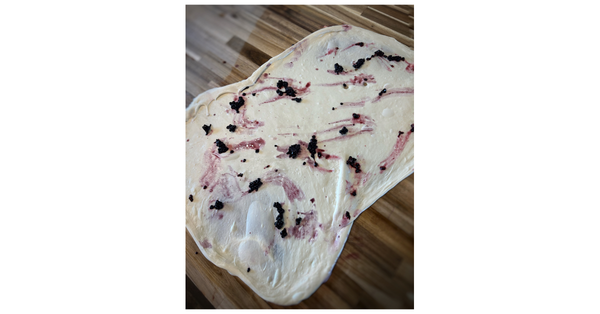
Adding Inclusions at Lamination
Lamination happens before bulk rise has finished, typically performed within the first or second fold after development. The dough is gently stretched as thin and far as possible into a large sheet and then folded over itself many times. This creates layers, strengthens the gluten network, and helps evenly distribute inclusions. Because the dough is still highly extensible at this stage, you can stretch it thin without tearing or damaging the structure. Once bulk fermentation begins, gas builds inside the dough, making it much harder to stretch without popping those gas pockets or tearing the gluten.
Adding inclusions during lamination allows them to stay evenly suspended throughout fermentation, leading to more even distribution. It also adds strength while incorporating inclusions, which is a nice added bonus.
Key things to keep in mind:
- Works best early, when the dough is still highly extensible.
- Once gas develops, lamination becomes risky for structure.
- Leads to even inclusion distribution and open crumb.
- Builds gluten strength while incorporating inclusions.

Adding Inclusions During Folds
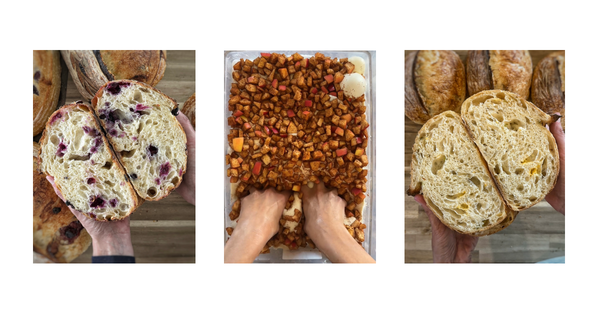
Adding inclusions during folding is another highly effective option. After the dough has some initial gluten development, you can begin incorporating your inclusions as you continue your fold schedule. This can be done by dimpling inclusions into the dough or sprinkling them on top before performing a coil or stretch-and-fold.
This method keeps inclusions tucked inside the dough, minimizes surface clumping, and allows them to continue distributing more evenly with each fold. Wet, heavy, or delicate inclusions often respond better to being added during folds because the dough already has some strength to support them.
Considerations when using this method:
- Dimpling helps prevent surface clumping.
- Folds continue distributing inclusions evenly.
- Works well for inclusions that are fragile or wet.
- Clean, efficient, and well suited for larger batch production.

Adding Inclusions at Final Shaping
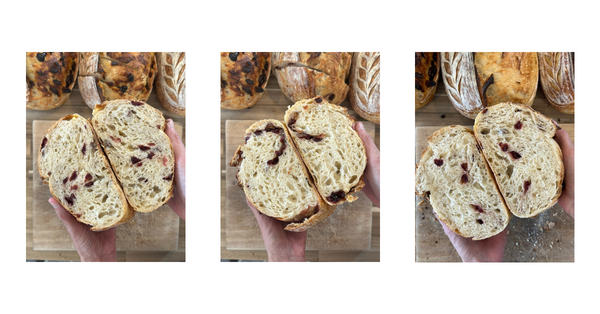
Sometimes you might forget to add inclusions earlier and need to add them at final shaping. While this can work in a pinch, it comes with some downsides.
By the time you reach final shaping, the dough has developed gas and structure. Trying to add inclusions now often leaves them closer to the surface instead of fully incorporated, leaving inclusions in more of a swirl, baking up on top of the loaf rather than inside. This can also degas the dough and pop those precious air pockets you built during bulk fermentation. This method is usually not ideal if you want consistent product quality, especially for sales.
Potential issues with adding inclusions late:
- Harder to incorporate without degassing.
- Inclusions often stay near the surface.
- Leads to tighter crumb and uneven distribution.
- Less consistent results for appearance and texture.
- Inclusions end up just under the surface of the dough, making scoring more difficult.

Adding Inclusions in the Mixer
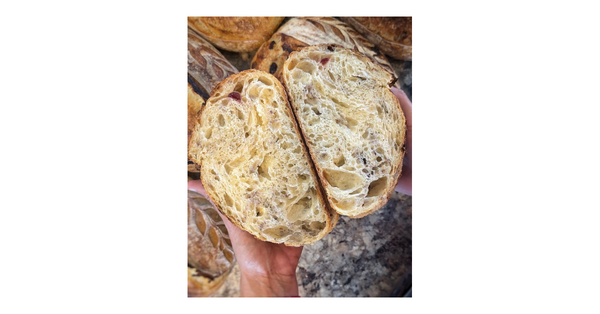
In some cases, inclusions can be added directly during mixing. This method works best for inclusions that can handle the mechanical mixing process without breaking down or compromising the dough structure.
When adding inclusions in the mixer:
- Add inclusions toward the end of mixing, after most gluten development has occurred.
- Mixing too early can shred or smash delicate inclusions.
- Heavier or more durable inclusions like seeds, grains, or certain cheeses can handle this method better.
- This can save time and streamline production for larger batches, reducing extra handling steps.
- Be mindful of how the inclusions affect dough hydration and strength as you mix.

Which Inclusion Method Is Right For You?
There is no one perfect method for everyone. Try different approaches based on your dough, your inclusions, and your production size. Each method gives slightly different results, and part of the fun is finding what works best for your process and your bake.
Related stories


5 minutes
News
Hattie's Bread Box Bakery is on the Rise
Lauren Leone


10 minutes
News
Fig and Bean Bakery: Taking Gluten-free bread to new heights
Sam Stevens


2 minutes
News
Ensuring Safety and Quality: Simply Bread Ovens now shipping with NSF Certification
Simply Bread Co.

4
Recipes
Vegan Morning Buns Recipe
Lauren Leone / Lisa Allen


9
Baker tips
Branding Your Cottage Baking Business


5 minutes
Stories
Simply Bread Oven – Compact Commercial Grade Oven for Small Food Businesses
Liana Gailand


5 minutes
Recipes
Sonora Blueberry Lemon Babka with Karen Quinones
Karen Quinones

3 minutes
Recipes
Dark Pan Loaves | Simply Bread Recipe
The Simply Bread Team